Bedroom | Rest
ABSTRACT
Rest is the quiet architecture of renewal. It is the composition of rhythms, atmospheres, and conditions that allow the body and nervous system to recover in concert, restoring clarity, balance, and ease within an ecology of care.
Rest is designed, not default.EDITORIAL
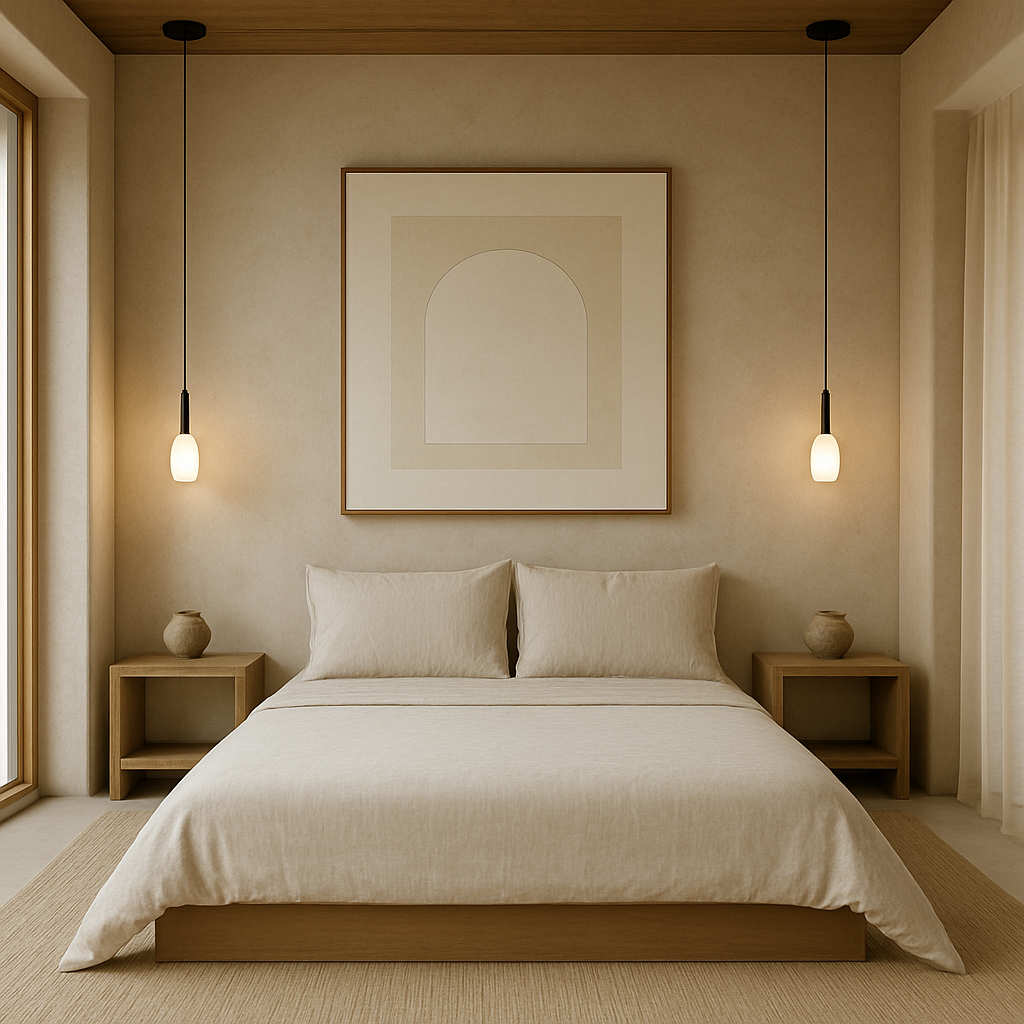
The bedroom is the most sovereign room of the home. It holds the threshold between consciousness and sleep, effort and release, activity and silence. Here, the nervous system learns what safety feels like. The quality of this room becomes the quality of our attention, mood, metabolism, and endurance.
Rest is not absence. It is structured.
It is created through rhythm, atmosphere, and boundary — the architecture of conditions that make restoration inevitable.
Light, acoustics, temperature, darkness, materiality, and order all participate in shaping physiological repair. The body responds to conditions, not intention alone. Deep sleep becomes possible where the environment makes rest inevitable.
Monastic interiors have long understood this. Restraint is not aesthetic minimalism; it is neurological kindness. A room free of visual noise, unnecessary furnishings, and persistent digital distractions allows the mind to relax and unwind.
The bedroom is not a storage space. It is an instrument.
Luxury, in this context, is not excess. It is precision: the correct mattress density, air quality that supports slow breathing, linens that regulate temperature, curtains that teach darkness again, and silence deep enough for the mind to stop negotiating with the world. These choices are architectural decisions about the body.
Rest also extends beyond sleep. It is the emotional and cognitive repair we allow ourselves. To enter the bedroom is to join a slower register of living. It is the place where we rehearse letting go — daily, quietly, without spectacle.
Frameworks
Conditions for Stillness
Rest emerges when friction is reduced. The room should minimize interruption, glare, clutter, and auditory intrusion. The visual field should be simple enough that the body does not brace against it.
Nervous System Literacy
The bedroom supports parasympathetic dominance: cool temperatures, low light, weight, and tactile softness cue safety. The room teaches the body that nothing is required.
Rhythm and Threshold
Evening is a choreography. The transition from waking to sleep is architectural: dimming light, softening sound, lowering stimulation, reducing language, and reducing decision-making.
Material Language
Stone cools; wood grounds; linen softens edges; wool insulates silence. Each material interacts with the nervous system and contributes to the experience of ease.
SPATIAL Choreography
Reduce visual density. Edit rather than add.
Remove or distance screens. Digital silence precedes bodily silence.
Darken the room fully at night; let the eyes rest as deeply as the mind.
Prioritize acoustics. Quiet is not passive; it is curated.
Treat the bed as a calibrated tool rather than décor.
The bedroom should read as a single, coherent composition. Nothing should argue with rest.
Non-Prescriptive Ritual:
Brief journaling before sleep to clear cognitive residue
slow, unguided stretching
breath aligned with lengthened exhale
waking without immediate light or dialogue
Optional tasks that serve as gentle adjustments in orientation.
Rest is the structure that lets life soften and continue.