Rest
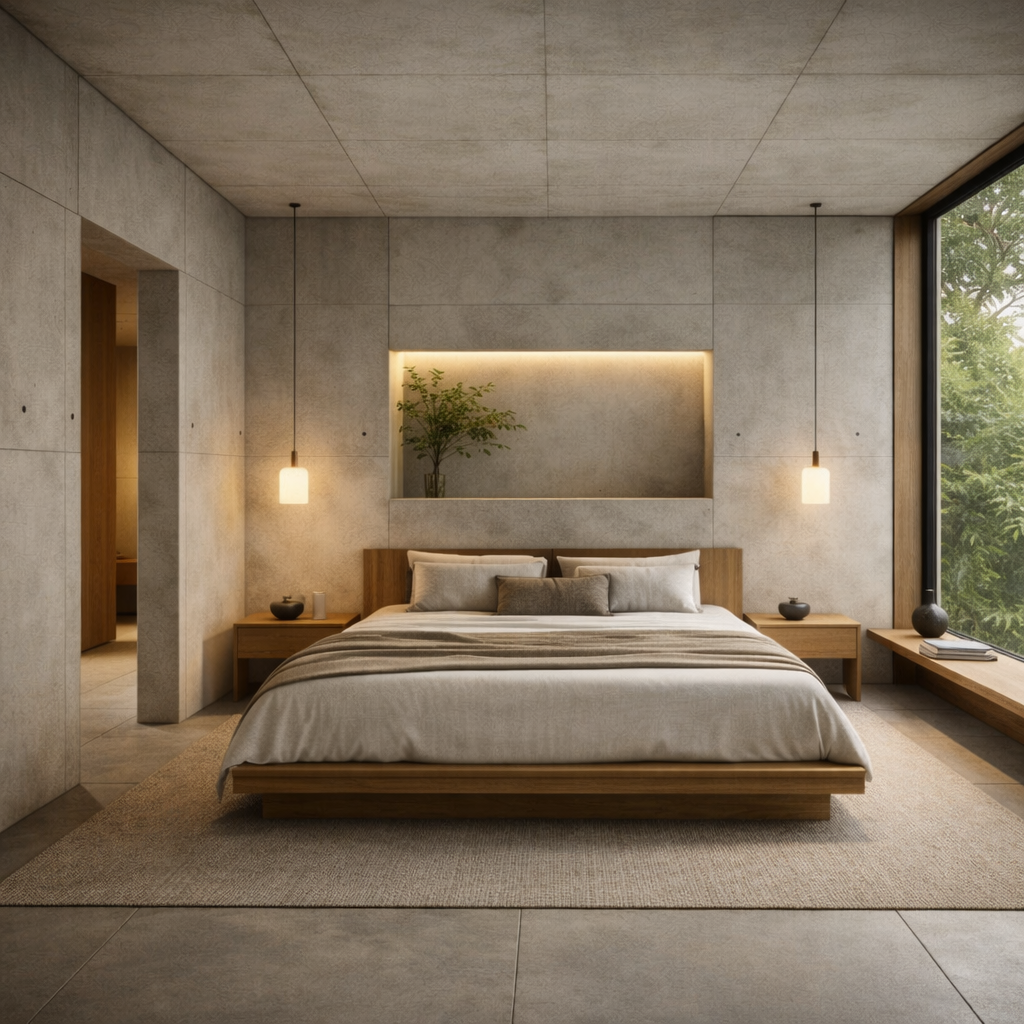
Abstract
Rest is framed as a foundational condition that supports attention, physiological regulation, and coherent experience, rather than as a reward contingent on productivity.
In contemporary culture, rest is frequently positioned within an economy of effort and reward. It appears as compensation for labor, a temporary suspension justified by fatigue, or an indulgence deferred until obligations are met. Within this logic, rest becomes conditional, deferred, and instrumentalized, positioned in service of performance rather than understood as structurally necessary.
Within well-being discourse, this logic mirrors performance-oriented models that prioritize output while treating recovery as secondary. Such approaches often overlook the cumulative effects of attentional depletion, physiological dysregulation, and environmental overstimulation. When rest is reduced to absence, its role in maintaining continuity across cognitive, bodily, and experiential systems is obscured. It is a condition that precedes action and sustains it. When rest is assumed foundational, attention stabilizes, bodily rhythms settle, and experience regains continuity. Life is no longer carried forward by momentum alone, but held within a legible structure.
Phenomenology of Rest
From a phenomenological perspective, rest describes a qualitative shift in how experience is inhabited. Rather than disengagement from the world, rest signals a release from compulsion. Urgency recedes, perception widens, and the body is permitted to return to its own tempo. Rest recalibrates attention. Sensory thresholds soften, internal pressure diminishes, and bodily regulation resumes. Without these conditions, activity persists, but coherence degrades. Rest restores not just energy, but also intelligibility.
In the language of Martin Heidegger, dwelling becomes possible when one is no longer driven forward by demand. Rest, in this sense, is a prerequisite for dwelling rather than its consequence — a precondition for inhabiting life with orientation and care.
Space, Atmosphere, and Rest
Rest does not occur independently of the environment. Spatial and atmospheric conditions shape it. Architectural theory recognizes that space is not neutral; it actively structures perception, behavior, and affect.
Christian Norberg-Schulz describes atmosphere as the means through which space becomes experientially legible. Within this framework, rest emerges not through effort, but through alignment: clarity of form, restraint of material, and modulation of sensory input.
Environments saturated with visual noise, auditory intrusion, or constant interruption impose a continuous demand on attention. By contrast, spaces characterized by quiet, legibility, and temporal openness support the body’s capacity to settle. Rest, then, is not solely internal. It is relational — produced through the correspondence between body, mind, and setting.
Rest and Agency
When momentum dominates, agency narrows. Perception contracts around urgency, and action becomes reactive. Rest interrupts this automaticity. Attention widens. Choice re-enters. Rest does not oppose responsibility or effort. It enables them. By maintaining coherence across cognitive, physiological, and environmental systems, rest preserves the ground from which intentional action can arise.
Rest, when understood as a condition rather than a reward, reshapes how life is organized and valued. It precedes productivity rather than following it. It sustains clarity, regulation, and continuity without spectacle or excess. Within CRD Home, rest is approached as architecture: a structure that holds experience, supports care, and allows life to continue with coherence over time.